
Lakeland North at a glance
| Location | 18.7 miles south of downtown Seattle |
|---|---|
| County / jurisdiction | King County, Washington |
| Population | about 14,664 (ACS 2020-24 estimate) |
| Typical home built | 1978 (median year built) |
| Housing mix | 77% single-family detached, 5% in 2-4 unit buildings, 8% in larger buildings |
| Owner-occupied homes | 74% |
| Nearby creeks & rivers | BIllingsley Pond (0.4 mi), Lake Dolloff (0.7 mi) |
| Parks & green space nearby | Camelot Park, Bingaman Pond Natural Area, Lake Dollof Access Area |
| Nearest highways | I-5 (0.5 mi), SR 167 (1.8 mi) |
| ZIP codes | 98001, 98003, 98002, 98032 |
Entry Points in Lakeland North: the local picture
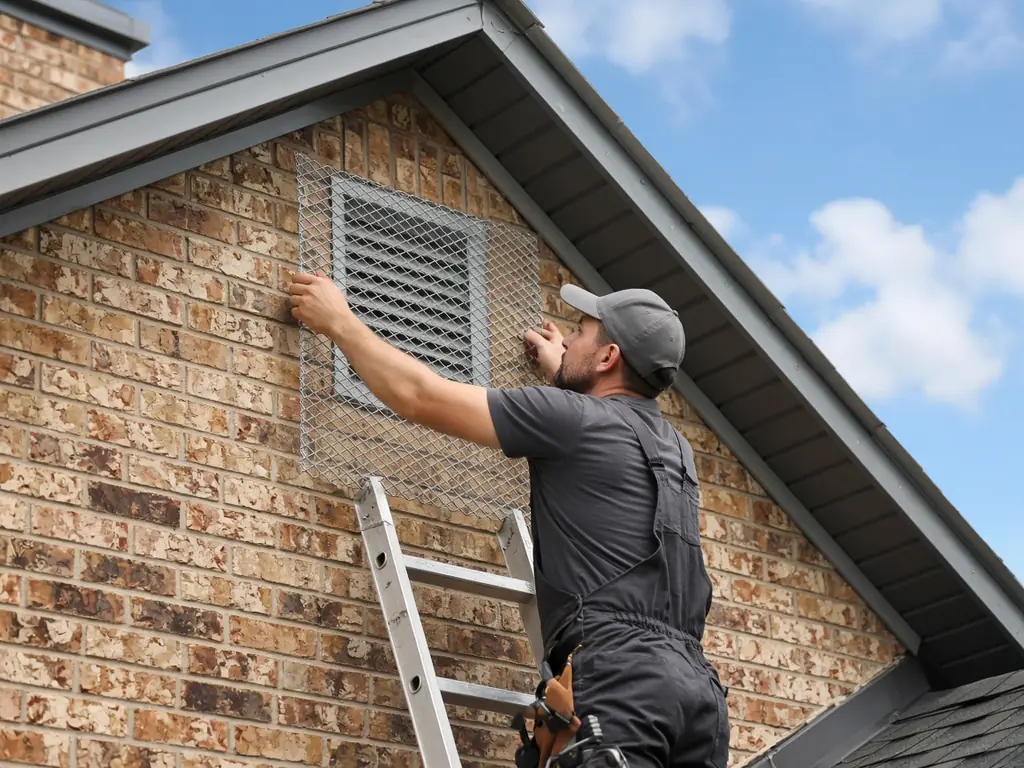
Most homes here were built in the 1960s and 1970s: ranches and split-levels with attached garages, crawlspaces or storage rooms, and soffit and gable vents that are now half a century old.
Green space such as Camelot Park and Bingaman Pond Natural Area supports field and house mice through the summer; when nights cool in the fall, homes along the edges see the first wave indoors.
With about 77% of homes single-family detached, most mouse problems in Lakeland North start in attached garages, crawlspaces and basements rather than shared walls.
On homes of this age, exclusion usually focuses on garage door seals and corners, utility penetrations, dryer and bath vents, and roof returns.
Signs to look for
- Activity returns every fall
- Daylight visible around garage door corners or utility lines
- Gnaw marks around vents, soffits or siding corners
- You keep catching mice even after cleaning up food sources
What happens when you call
- Walk the whole envelope. Foundation, siding transitions, weep gaps, garage door, AC and gas lines, dryer and bath vents, soffits, roof returns, gable vents and chimney.
- Photograph and list every gap. You get the findings in writing, ranked by how likely rodents are to be using each one.
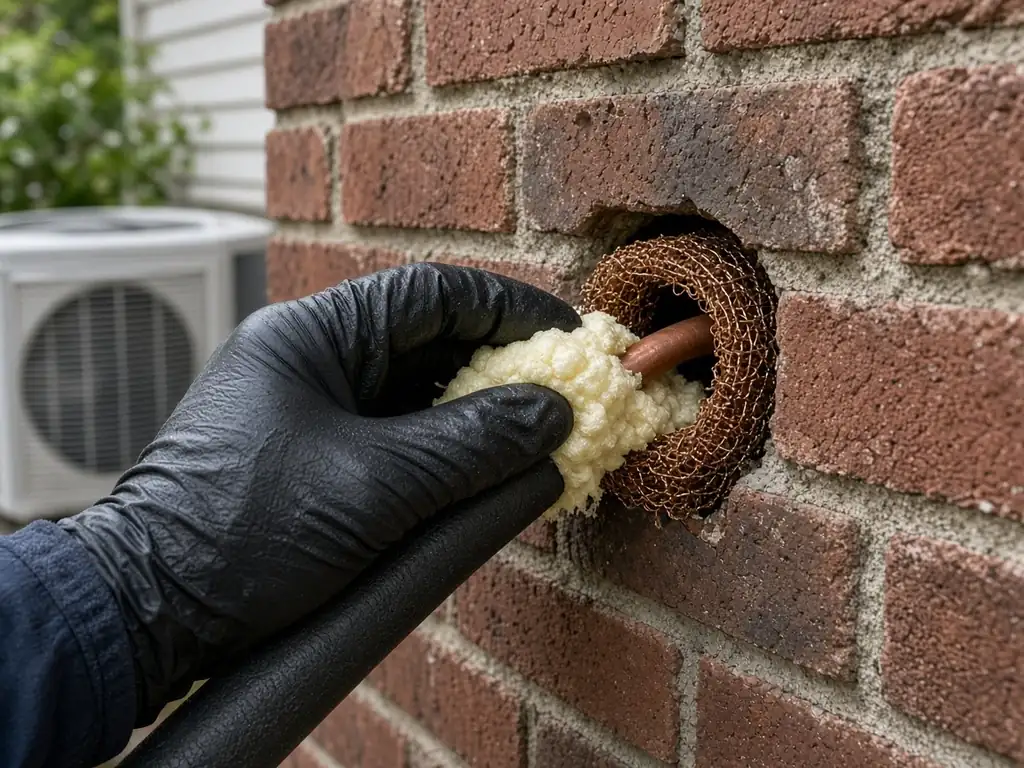
- Seal with rodent-proof materials. Copper or stainless mesh, hardware cloth, sheet metal, concrete patch, door sweeps and vent screens. Spray foam alone is not rodent-proof.
- Verify. Traps or monitors confirm nothing is still getting in. Any new activity is traced back and sealed.
Rodent Exclusion cost in Lakeland North
Here are typical ranges for Lakeland North. An older or larger home with more gaps sits toward the top; a new problem caught early sits toward the bottom.
| Item | Typical Seattle-area range |
|---|---|
| Exclusion inspection with photos | Free with service |
| Basic sealing (garage, doors, utility lines) | $300 – $800 |
| Whole-home exclusion | $800 – $2,500 |
| Older homes with many gaps / roofline work | $2,500+ |
Ranges reflect typical prices in the Seattle market. They are a guide, not a quote; your price depends on the inspection.
See the full Seattle rodent control cost guide
Local resources
For rats on public land, in an alley, on a vacant lot or on a neighbor's property in Lakeland North, contact Public Health - Seattle & King County or your city code enforcement office. Rodents inside your own home or business are the owner's responsibility, and that is where we come in.
Rodent Exclusion near Lakeland North
See also rodent exclusion across the Seattle area.
Frequently asked questions
Why not just use spray foam?
Rodents chew straight through plain expanding foam. Foam is fine as a filler behind mesh or metal, not on its own.
How small a gap can a mouse use?
About 1/4 inch, roughly the width of a pencil. Rats need about 1/2 inch.
Is exclusion worth it for an older Lakeland North home?
Older homes usually have the most gaps: settled foundations, old vents, pipe chases and additions. Sealing them is often the difference between a one-time fix and calling every winter.
Which ZIP codes do you cover in Lakeland North?
We cover 98001, 98003, 98002, 98032 in and around Lakeland North, along with nearby Des Moines, Kent, Normandy Park.
Get a free rodent inspection
Tell us what you are seeing and where. We will book a free inspection with a licensed local technician.
Call (564) 220-4806